
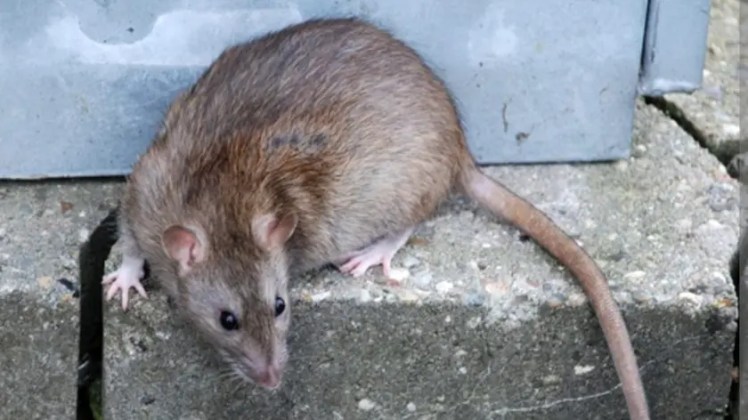
Pest control expert Roncali: “High tides used to kill litters in their burrows; now, the young are safe.” A female can give birth 7–8 times a year, with up to 16 pups per litter, leading to a population boom in the city. The Rattus norvegicus, commonly known as the pantegana (brown rat), dominates the calle of Venice, but the black rat is also present.
By Costanza Francesconi
The gaps within walls hold no secrets for them, the kings of Venice. They scale fruit trees like free climbers and move with the agility of gymnasts across roof tiles and gutters. They are capable swimmers when needed, and they reproduce at an astonishing rate. It is unpleasant to say it, but rats have become a fixture of the Venetian landscape. This has become even more evident since the MOSE flood barrier system became operational in 2020.
“This phenomenon was also highlighted in an intriguing study by Luigi D’Alpaos, professor emeritus of Hydraulics at the University of Padua and an expert on the Venetian Lagoon,” explains Filippo Roncali, technical manager at Veneziana Disinfestazione. Founded in 2017 in the Cannaregio district and led by Chiara Delmonte and Alessandro Biscontin, the company is the only one in its sector based within Venice’s historic center—a location that gives them a deep understanding of the area’s unique challenges, logistical problems, and technical requirements.
Across the historic center and the islands, the firm provides rodent and pest control, bird deterrent services, HACCP monitoring, and disinfection and sanitization. Among the various species present, Venice is home to “His Majesty”, Rattus norvegicus – the brown rat commonly known as the pantegana – as well as Rattus rattus, or black rat. The so-called “field mouse” is rarer, though it can occasionally be found on Lido.
The MOSE factor: why the rat population in Venice may have increased
Roncali cites a hydraulic study by D’Alpaos, noting that before the MOSE system was in place, a complete turnover of the lagoon’s water through the port inlets took 40 years; now, it takes 80. In terms of flood protection, the system has performed as intended.
“As a side effect,” the expert observes, “we have noted an objective increase in the number of rodents in the city. This is because, in the past, when an acqua alta surpassed a certain threshold, the water would reach the septic tanks (or in some cases containment tanks). Since a large portion of the Rattus norvegicus population nests within these conduits, the adult rats could escape, but the young would drown.”
This frequent drowning of the young naturally kept the rat population in check. “Before the arrival of MOSE,” adds Delmonte, “we knew that in the wake of a high-tide event, the phone would ring incessantly with reports of rats fleeing the rising waters.”
Black rats and brown rats: the species that inhabit Venice
Let’s look at the types that roam Venice so fearlessly. Black rats and brown rats (or pantegane) get along perfectly well. While they may be hard for an untrained eye to tell apart, they do have differences: the Rattus rattus (black rat) has a more elongated snout, prominent ears, and a tail longer than its own body that Roncali explains functions “literally as a fifth limb that they use to climb in the most incredible ways”.
In terms of reproduction, a single female – accounting for the offspring that themselves become able to breed – can lead to the birth of about 1,500 individuals in a single year.
“They are fond of essential oils, seeds, and fruits, so you’ll find them in the city on climbing plants. Wisteria and palm trees are like a ‘Gardaland’ [amusement park] for them,” the expert jokes. He also notes that a flea carried by this rat “was the very thing that caused the plague to spread in the 1600s.” While the black rat inhabits the upper levels, the brown rat reigns on the ground, where it builds its den. “An alpha male digs the largest burrow, usually in gardens, with the females settling all around it.”
Where rats hide and what attracts them
When and where are you most likely to encounter a rodent? According to pest control specialists, the most accurate answer is: always and everywhere. “During major city events, when there are larger crowds, we tend to receive more reports. Even though the Municipality takes great care in managing waste, this is an inevitable consequence.”
Drywall, open doors, inadequate trash bins, and discarded refuse all create an inviting environment for them. Beyond just seeking food, rats also gnaw on electrical cables, a behavior that helps them file down their incisors and keep them at the proper length.
And what about cheese; do they eat it? “Only in cartoons. It’s also a myth that cats hunt rats.” Rats seek out fresh water. “They are particularly drawn to gardens,” explain Roncali and Delmonte, “which should be kept clean by removing any fruit that falls from trees. They are also attracted to homes near canals, warehouses, and entryways that face a waterfront. This creates problems for private residences, bars, and restaurants alike.”
How pest control works and what it costs
“You have to start with the premise that wherever there are humans, there are rats,” Roncali notes. In this context, professional pest control services work to monitor and mitigate the issues caused by a rat infestation, eventually eliminating it. The process begins with a free site inspection by a specialized company. If a problem is confirmed, the service is set up—typically by placing stations containing rodenticide bait—followed by an initial follow-up check and ongoing monitoring for a period of six to twelve months. Costs start at roughly 250–500 euros for the initial setup, depending on the size of the area, with subsequent visits costing between 70 and 100 euros each.
The technician shares an interesting detail: “We often get calls about trees ‘full of squirrels’, which actually turn out to be black rats. There’s no getting around it: rats are taboo.”
Source: La Nuova di Venezia e Mestre
Don’t miss a story! Subscribe to receive news from Venice by email: