Constant building maintenance, cultural policies, and the transformation of living spaces into tourist accommodations make it increasingly difficult to strike a balance that meets everyone’s needs.
By Alberto Vitucci
January 18, 2026
Fifty-three years after the first Special Law, after billions of euros spent on projects that were not always useful for its survival, Venice is a little fed up with its special status. It would like to return to being a ‘normal’ city, with its inhabitants, its artisans, development that is not only focused on tourism, the maintenance of its stones and the preservation of its lagoon. But there is still a long way to go. There are many unresolved issues. And we do not always remember that Venice is truly special in every way.
The new delegation for territorial specialties and the enhancement of the industrial area of Porto Marghera could help, as could institutional collaboration between the Region, the Municipality and the national government. What is required is not only funding – which remains a necessity – but above all, a constant focus on emergencies, some of which are now chronic and never resolved.
The list is long. And to resolve the emergencies, it is now clear that ordinary tools are not enough and, as we have seen, extraordinary commissioners are not needed. There is a need for ‘dedicated’ policies, as the president of the Region, Alberto Stefani, has said. The city of water is unique and fragile. Its hinterland is also unique, with land and salt marshes overlooking the lagoon, where it was decided, after World War II, to build one of Italy’s largest industrial and petrochemical areas. The managing director, who is a Venetian from the mainland and also has experience in municipal government, will now have to bear this in mind.
First point: protection
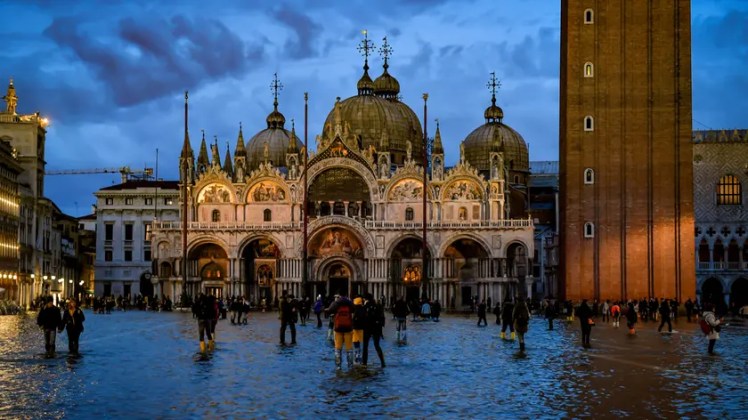
There is the Lagoon Authority, what remains of the Public Works Department, to be restored to its place as the Water Authority, a centuries-old magistracy created for the protection of the waters by the Serenissima in the 16th century. But there are also other bodies, such as the Metropolitan City, the Municipality, the Port, and the Region itself. Coordination is needed, and above all, resources are needed. Since the early 2000s, when everything was focused on Mose, the money for maintenance has not been forthcoming. And Venice is not a city like any other.
Maintenance
Maintenance on buildings with their ‘feet’ in salt water must be carried out continuously, because the rise of salt inside the bricks does not stop, but rather increases with climate change. The excavation of the canals and the repair of the waterways must be taken care of. And this requires ‘special’ resources, in addition to those for Mose, which is useful, but will not be enough to save Venice with the predicted rise in sea level.
Tourism
What is seen as an opportunity in the rest of the world has become a risk in Venice. Putting the brakes on tourism in the historic city and limiting visitor numbers is not an obstacle to economic development, but rather a means of helping the city to survive. Otherwise, the depopulation of families expelled from their homes—which have been turned into tourist rentals—will continue, and the number of inhabitants will fall below the minimum threshold. Today, there are 47,000 inhabitants in the island city, about a third of what there were half a century ago.
Culture
Venetian museums and foundations, almost always well run, are a treasure trove of masterpieces and a great source of employment as well as income. But it is important to understand that these activities need to be supported in a systematic way. For example, by contributing to restoration work and activities for young people.
Transportation
It is true that ACTV earns money from vaporetto tickets for non-residents. But it is also true that connections to the islands must be guaranteed, and above all, that they are very expensive in winter. The transportation network in the lagoon must be protected and, in some cases, reorganized. But this is another obvious special element to take into account. A kilometer on water does not cost the same as a kilometer on land.
Healthcare
The hospitals in the historic city and on the islands sometimes serve a much wider population than just residents, if you count the average number of tourists. But above all, unlike on the mainland, it is not possible to reach the hospital by car. An aging population needs dedicated and efficient services spread throughout the area. This is also a special feature of Venice.
Moto ondoso and traffic
Moto ondoso (motorboat waves) does not only mean excessive speed. It also means damage to the structure of the city and the lagoon. Boats in the lagoon must be special. They cannot be made as if they were to be used on the open sea, starting with those belonging to public bodies.
Marghera
For decades, there has been talk about reclaiming and revitalizing Marghera. Most of these projects are at a standstill. The “enhancement” must first and foremost involve the removal of bureaucratic obstacles—which certainly does not mean relaxing environmental controls—and the application of the ZLS, the simplified logistics zones. To find new jobs that are not related to tourism, we must start from here.
Source: La Nuova di Venezia e Mestre
 Campaign For A Living Venice