
Venice’s crises stem not from tourism itself, but from a model that has sacrificed balance, diversity, and residence. To revive itself, it must rediscover itself as a crossroads of skills, a fertile space for ancient crafts and innovations capable of improving the quality of life.
By Gianni Moriani*
Dec. 5, 2025
Today’s Venice is experiencing a profound tension between what it is and what it could be again. In the historic center, there are 1,090 bars and restaurants, in addition to approximately 50,000 beds for just 48,000 inhabitants: a ratio that starkly describes the transformation of the urban fabric.
The city has been unbalanced toward a tourism monoculture that invades public spaces, generates low wages, produces an unsustainable amount of waste, and fuels degenerative phenomena such as alcohol tours, compromising the quality of daily life.
The pressure is concentrated in well-known areas: Campo Santa Margherita, which has become the epicenter of nightlife, which can implode into disruptive nightlife; Rialto, where traditional commerce has almost disappeared, replaced by bars and bacari; the Fondamenta degli Ormesini and Fondamenta della Misericordia, which have become gastronomic corridors; and the long Cannaregio canal, now dominated by restaurants. Where residents, shops, and various businesses once coexisted, today an almost exclusively tourism-oriented dimension prevails, clashing with the lives of the local residents.
But there’s another element that also speaks to Venice’s transformation: the disappearance of artisan workshops. For centuries, these activities represented the beating heart of the city, places where knowledge was transformed into value, where skills and creativity generated jobs, identity, and quality. Their erosion isn’t just an economic issue: it’s a profound cultural loss, because it deprives Venice of its ability to produce, not just consume.
And yet, some signs of change exist. The city is beginning to once again attract knowledge, ideas, and innovation.
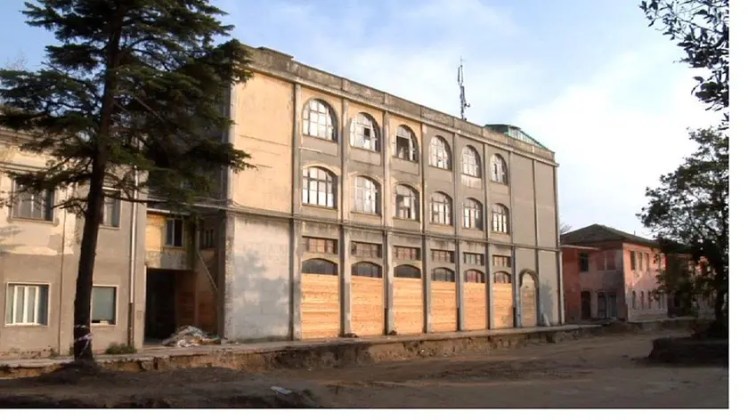
A concrete example is offered by the project to transform the former Ospedale al Mare on the Lido into a science and technology park dedicated to applying AI to medicine. This facility could generate 900 highly specialized jobs and could function as a hub that can reverse the trend toward tourism, sparking an economy in Venice based on knowledge, research, and added value.
This project points to a possible path: rebuilding an urban ecosystem where tourism and innovation coexist without the former devouring everything else. A city that is not just a place to visit, but an environment where knowledge is produced; a city capable of attracting young people, researchers, and businesses who can imagine the future, and where our graduates are no longer forced to emigrate to find work.
Venice’s crises stem not from tourism itself, but from a model that has sacrificed balance, diversity, and residence. To come back to life, the city must rediscover its historical vocation: to be a laboratory of ideas, a crossroads of skills, a fertile space for ancient crafts and innovations capable of improving people’s quality of life. Only in this way can it escape the distortions of the present and rediscover its soul. —
*teacher and essayist
Source: La Nuova di Venezia e Mestre
 Campaign For A Living Venice