
PFAS, air and pollutants: here are all the things that don’t add up. Local committees threaten: “If the OK arrives, we will block the construction site”
By Francis Furlan
November 29, 2024
“Even though the project concerns a plant built with advanced technologies capable of producing limited impacts, considering the environmental context of the territory in which the new work is located, situations with critical problems have been identified, in particular for the air”.
This is what the Istituto Superiore di Sanità (ISS) said in the opinion it sent to the Veneto Region, which will have to decide, in the next few days, whether or not to authorize the Eni Rewind project.
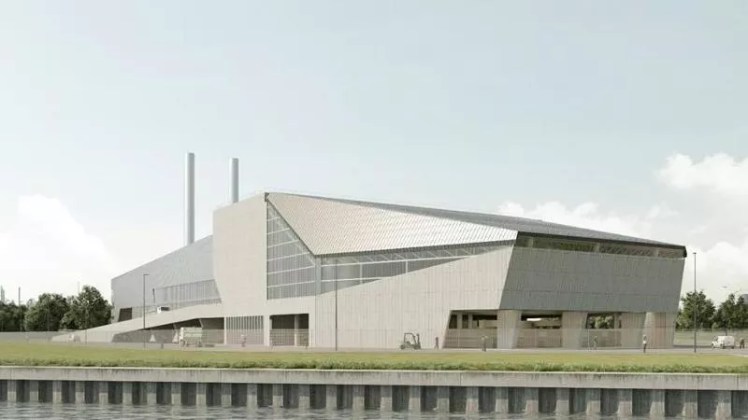
Rewind is a plant designed to incinerate civil sewage sludge – up to 190 thousand tons per year – planned to be built in Porto Marghera in via della Chimica 5 within the perimeter of the Petrochemical plant, for an investment that had been estimated by Eni at 140 million euros.
The ISS’s criticisms: air pollution and PFAS
The ISS opinion, signed by the Director of the Department of Environment and Health, Marco Martuzzi, comes at the end of a further investigation phase that had been prepared by the Region, and as a response to the additions Eni Rewind presented to the objections that the ISS had already raised.
Objections which, reading this second opinion, have largely not been remedied.
Another problem, the Institute observes, is that there is a lack of “a complete picture of the environmental quality situation ante operam into which the contribution of the plant will inserted”. More generally, “for some pollutants the contribution of the plant cannot be negligible especially in relation to the territorial context”.
Then there is the issue of PFAS that could be contained in the sludge. The in-depth analyses carried out by Eni Rewind are not sufficient for the ISS, and not only because Eni could have “made a more suitable chemical characterization”, for example on the sludge samples of the Consorzio Viveracqua (a group of 12 water companies in the Veneto, including Veritas) from which it will receive the sludge.
The other reason is that, in the ISS’s assessments, doubts remain regarding the actual disposal of PFAS in the process of incinerating civil sludge.
So what happens now?
The Region is evaluating the opinion with the technicians of the Health Directorate. After that, the VIA technical committee (Environmental Impact Assessment) will be convened and will have to express its opinion. The Committee could reject the project or authorize it with a series of prescriptions, which the ISS opinion also suggests: “In the event that the plant is built, it is suggested that an accurate environmental monitoring plan be prepared, implementing the air quality network”.
“During the investigation we have examined every possible impact from an environmental and health point of view”, comments Cesare Lanna, head of the Environmental Assessments Directorate of the Region, “now the committee will have to formulate its technical-scientific assessments”. The outcome is expected by mid-January.
The reactions
For the No Incinerator Committee, the ISS opinion “is a rejection without appeal. The ISS had already produced a very critical report last February, but now, questioned again by the Region, it has responded by upping the ante”.
And again: “If the VIA Technical Committee and the Conference of Services give the green light to Eni despite the ISS’ warnings, a very tough clash will begin. We are ready to physically block the construction sites, but before that, an appeal to the TAR and criminal charges will be filed against the legal representatives of the bodies in favor of this eyesore”.
Also against the project is Monica Sambo, city councilor and municipal secretary of the Democratic Party, who wrote a message with Adriano Gobbin of the Marghera circle: “As members of the Democratic Party, we have always maintained that this plant is not compatible with the territory. We must be respectful of the history of a territory that has already paid, and is still paying, an enormous cost for industrial development that was carried out for too many decades without due attention to people’s health and care for the territory”.
Erika Baldin, regional councilor of the M5S, said: “After the new report from the ISS, the Region will have to reject the project, which is potentially dangerous for the health of people who live in an already compromised environment”.
Source: La Nuova di Venezia e Mestre
 Campaign For A Living Venice