
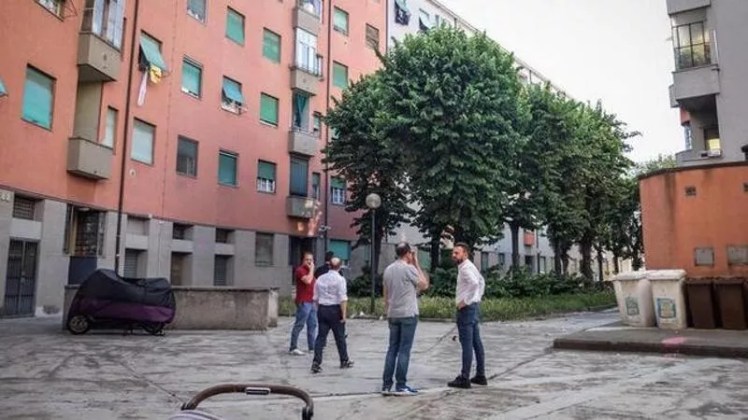
Thousands of ATER housing units are vacant, with over 10,000 families waiting for a home. The lack of resources for maintenance is holding up assignments, with old and neglected buildings, especially in Venice
By Laura Berlinghieri and Annalisa Girardi
November 02, 2024
There are almost 8,000 vacant homes throughout Veneto, but there are over 10,000 families waiting to be assigned a home. The real estate portfolio of public housing exceeds 40,000 units, a fifth of which are uninhabited. Yet, in the span of one year only 130 applications were accepted.
These are the ATER figures, and the ATER paradox, revealed in the latest regional dossier, which was presented to the members of the second and fourth commissions of the Regional Council in an overview of public housing that is owned or managed by ATER. From reading these numbers – the opposition in the Council accuse – the lack of resources emerges.
More Resources for Maintenance
This is how the measure that the second council commission adopted two weeks ago came to be, which abolishes the fee that ATER pays to the Region, equal to 0.4% of rental values. An estimated annual savings of between 4 to 5 million euros, which can be reinvested in maintenance work on the houses.
“The large number of vacant housing units can be explained in precisely this way,” says Silvia Rizzotto, a member of the Northern League and president of the second council commission.
“Most of the properties are extremely dated, and for this reason would require very large sums for maintenance, especially in Venice. But these resources don’t exist. And there is a second reason: many of the properties, especially in the Belluno and Rovigo areas, are located in poorly served municipalities, where demand is low.”
These words don’t convince Jonatan Montanariello (PD), vice president of the commission, who accuses: “If the rent cut had been done ten years ago – and not only just now, given the ongoing disputes in some Municipalities over the payment of the IMU – ATER would have a nest egg of almost 50 million euros to be allocated to the maintenance of public housing”.
Collapse in Cavarzere
The need is very timely indeed, considering the narrowly avoided tragedy that took place in Cavarzere, in the Venice area, where two days ago the roof of a building managed by ATER literally collapsed.
In fact, the collapse was a very close call, the worst avoided because the two elderly residents of the condominium were in another room, watching TV. They ended up stuck in the stairwell, in a tangle of rubble and debris, but were rescued by firefighters.
“There are many important issues regarding the management of ATER buildings, such as arrears and maintenance, both ordinary and extraordinary,” explained Rizzotto, a member of the Northern League in the commission. Thus, it’s all a question of having resources available to be spent.
The Data
After all, ATER’s assets are considerable, standing at just over 1.2 billion euros, with 81.4 million euros in credit, but almost as much debt (69.8 million).
The most interesting figures, however, are those that concern rents paid and in arrears. The first is equal to 56 million euros, while the second amounts to 18.1 million. This means that a quarter of the amount of the expected rental income does not reach the Region’s coffers.
The highest percentage of tenants in default is in the province of Treviso, where they are 9.56% of the total. Regarding housing, the largest number of vacant apartments, 2,625, is found in the province of Venice. And Venice is also the province whose real estate assets(clearly) have the highest value: 751.5 million euros. However, an additional 317 million would be needed to fix up the existing housing units.
Then there are the families waiting to be assigned housing, more than 10 thousand in the whole of Veneto, compared to just 130 applications accepted last year. In this, the Belluno case is emblematic, with 351 families waiting for assignment in 2023 with just one application accepted over the course of the year.
(Laura Berlinghieri)
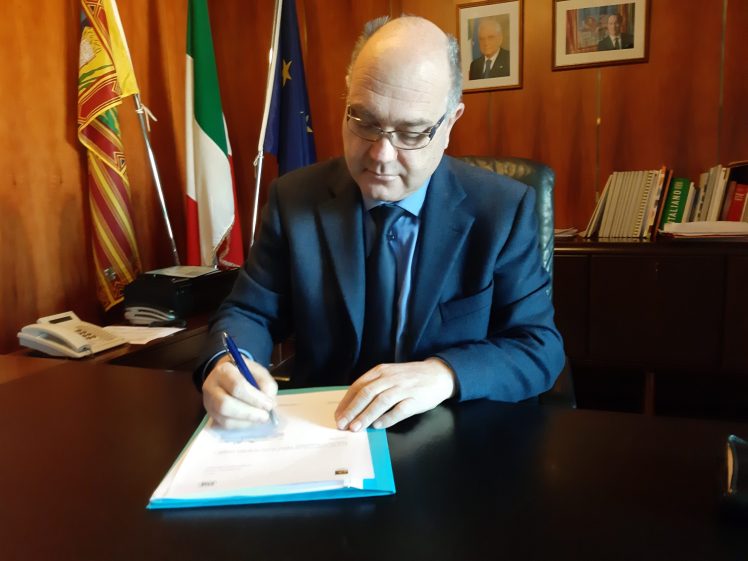
Valentino Scomazzon: “We need resources”
It seems like a paradox: almost 8 thousand vacant public housing units throughout the Veneto region and, at the same time, thousands of eligible families still waiting for a home. The problem is resources, because these homes are not in livable condition and require renovation.
The tragedy that was narrowly avoided in Cavarzere is proof of how urgent the need for intervention is. Valentino Scomazzon, the ATER coordinator in Veneto commented, “It was a municipal dwelling, managed by ATER. Therefore, extraordinary maintenance was not our responsibility. However, this collapse perfectly illustrates the problem of the lack of resources. It is proof that we need room to maneuver so the necessary interventions can be done”. Scomazzon went on to answer several questions.
What is the main problem ATER faces at the moment?
“The big problem is housing that needs to be renovated. It is a critical issue that varies from province to province, but there are always many units in need, and this is due to the lack of resources.”
What is being done to get these resources?
“We have three proposals. The first is a request we made to the Region. Next year we should have 0.4 percent available from the budget that the Region should leave us in cash, which is about 4 million for all of ATER. We should allow carrying out more interventions.”
But this money won’t be enough, right? According to the ATER’s own estimates, at least 317.5 million euros would be needed in the province of Venice alone to restore all the housing units to good condition.
“We understand that the blanket is always short, even for the Region, and that there are always many things to deal with. But at least something has been done.”
And the second proposal?
“We have asked the municipalities to waive the IMU so we could retain more resources. For example, in Vicenza this would be approximately another 500 thousand euros. Unfortunately, the municipalities also have their needs and to date we have not been able to follow this path. It is true that the municipalities get more money by collecting the IMU, but this money still risks being spent on the housing emergency, as social services might have to pay for a hotel for vulnerable families who do not have a home. We said we were willing to demonstrate that that money not taken in by the municipality would be spent within a year to recover more housing. It would be invested in the territory.”
Has this battle been aside?
“We will continue to look for a solution. We will write to the municipalities again, trying to make them understand the advantages that would accrue to everyone. Of course, the municipalities would collect less money directly, but they would have an advantage from a social point of view.”
Finally, the third proposal?
“We asked for 10 percent of the apartments from ERP (Public Residential Buildings, ed.) to be diverted and brought over to social housing. That is, to serve those people who are too “rich” to enter the ERP ranking, but also too poor to afford market rental rates. This would allow us to collect 300 euros of rent per month instead of 50 or 80. Faced with 600 or 700 euros of market rental prices, this could certainly be a big help for many people. There would always be a social response, which at the same time would allow us to collect a little more so we could deal with some mortgages to renovate existing apartments.”
And how are things proceeding on this front?
“The municipalities and unions are opposed to this idea, because they say that there are already too few ERP housing units and so we cannot take away more. But there are already very few, because if we do not have the money to renovate them, the units remain vacant regardless. If we implemented our proposal, we would instead have the possibility of recovering some units and still be able to respond to the medium to low income levels. We are talking about people and families at the bottom of the rankings, in the sense that they are the richest in the tender, but they are still people in difficulty”.
In addition to resources, there is also the issue of rental arrears. How do things stand from this point of view?
“Our legal office gets involved after the second month of non-payment. We try to intervene before a significant amount accumulates, perhaps by allowing the debt to be paid in installments. Eviction is the last resort. It is clearly a disappointment when this happens, but the law must be respected, also out of fairness to all the other tenants who pay their rent.”
(Annalisa Girardi)
Source: La Nuova di Venezia e Mestre. Photo of Valentino Scomazzon: vipiu.it
 Campaign For A Living Venice