
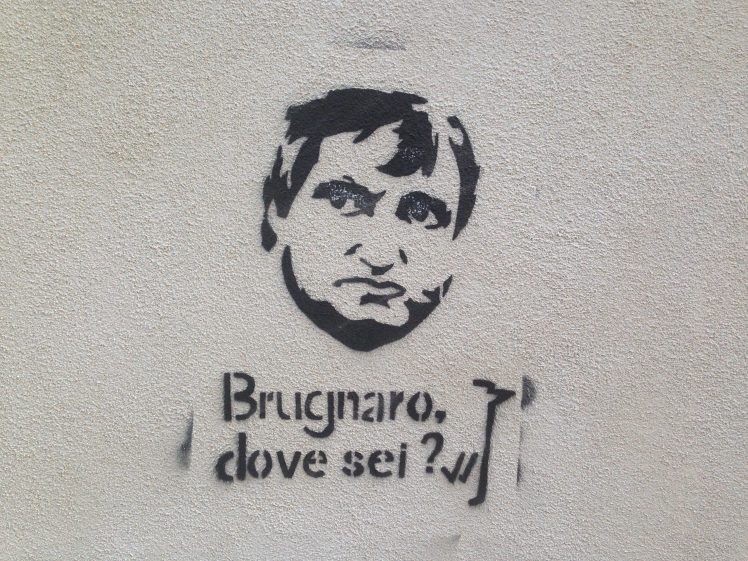
It’s the end of the Brugnaro system. Politics in Venice must be reinvented, and the indispensable trust between citizens, the administrative machine and political representatives must be rebuilt. In a democracy there is only one means to do this: voting once again.
By Giuseppe Saccà, Venice City Councilor for the PD
July 23, 2024
What is happening in Venice in these hours is something utterly unique. The administrative machine, starting from its top management (Mayor Brugnaro’s trusted men) and some managers in his subsidiary companies are under investigation. The mayor himself has received a warning that he is under investigation, and the councilor Boraso was arrested. Can it be said that this is the foreshadowing of a very large system in which politics has gone beyond its role? Absolutely yes. Adriana Vigneri has called it the Brugnaro System. It is clear just how serious all of this is to most, but not to the mayor, who has avoided meeting or speaking with the City Council, running away from his political responsibilities. Let’s reiterate what those are: policies.
Is this a bolt from the blue? No. We have long denounced the mayor’s personal conflicts of interest, a mixture of private and public interests. It is no coincidence that both the head of cabinet and the deputy head of cabinet were professionally active in Umana before this assignment. This mixture was never resolved by a blind trust which is anything but “blind”.
Venice must reinvent its politics; the indispensable trust between citizens, the administrative machine and political representatives has to be rebuilt. In a democracy there is only one means to do this: voting once again.
This is an essential step to relaunch our city. The judiciary will take its course, but politics cannot be based on the progress of the legal proceeding – we need an electoral campaign that is based on very clear programmatic points.
Brugnaro enjoyed broad support in the city, especially on the mainland, but today there is every possibility of being able to shift this support by leveraging the failures of the policies he implemented. Venice has been abandoned to the tourist monoculture, while Mestre and the entire mainland of the municipality have not seen a project capable of giving them a real position in Veneto – Padua and Treviso have clear specializations, while Mestre remains incomplete, and Porto Marghera is having clear difficulties in relaunching. Throughout all of this, any discussion that placed the theme of environmental sustainability at the center was set aside as ancillary in the pursuit of developing projects that are now largely out of date.
Furthermore, Mestre and Venice are facing a perfect storm. Nine years of the Brugnaro administration, nine years in which many public funds were mismanaged in ways which had not been seen in the city for decades. Unfortunately, the public finances are heading towards difficult years and the cuts have already started with this government, and frankly, as long as this administration exists, it is difficult to believe that the special law will be refinanced: how can Brugnaro go to Rome to ask for money for our city when the bad management of his administration has been exposed for all to see? It will also be impossible for him to acquire private resources: what Italian or foreign entrepreneur would invest in our city now in the face of the “Brugnaro System”?
So what should be done? A programmatic proposal from a broad center-left alliance should be defined as soon as possible. We’re certainly not starting from scratch. Much has been done, for example, in the City Council both in identifying some key programmatic points and in creating a close and productive relationship of continuous discussion between the council groups.
We need a clean break from policies and the Brugnaro system. In the political history of Venice there have been moments of big disruption, when politics was able to interpret the citizens’ strong discontent and at the same time plan and implement a vision of economic development with great attention to the quality of people’s lives and urban regeneration. At least two examples can be recalled: the first dates back to 1975, when a left-wing council was born that opened a phase of development that was able to break away from the chaotic growth model of the post-war period which had deeply wounded the urban and social fabric of Venice and Mestre; the second is from the early nineties, when a great alliance of center-left forces managed, through some key concepts such as “Venice, a plural city” and “Beautiful Mestre”, just to mention the best known, to rediscover a quality of administrative action in our territory, starting from the drafting of a new General Regulatory Plan and a Strategic Plan in which the themes of urban and industrial regeneration as well as environmental themes were central aspects.
Where to start again? Here are some key points.
- Housing: the city needs a Housing Plan that uses public resources to restore public housing assets that are currently unused, together with implementing active policies for the private market (a guarantee fund and tax breaks for those who rent to residents). Furthermore, the city must start expanding public housing again, with the mechanisms that we proposed in the city council, which were all rejected. Instead, public houses are being demolished (for example in Marghera) and social housing is being eliminated from projects where it was originally foreseen, as happened with the sale of the former Umberto I. A regulation of tourist rentals is obviously necessary, a policy that allows reducing the existing stock of homes that have been removed from the residential market, which the Council’s draft that is circulating these days does not address at all. This draft pursues a series of secondary measures but does not provide for anything established by the law, i.e. “promoting the increase in the supply of rental accommodation for long-term residential use and housing”.
- The tourist economy: the administration has established an entry ticket that only serves the commodification of the city. The first numbers, about which a “truth operation” is also necessary, show that it has not seemed to have led to any reduction in tourist entries into the city. There is no lack of proposals on this subject too, starting from a real tourist map, a tool that should be very simple and organized, in order to qualify the tourist experience of visitors. This is non-repressive measure, which in fact favors tourism that looks for the quality of the offering (which is not synonymous with expensive) and the tourist experience itself (for brevity, regarding this I refer to what is written on ytali where there are also other proposals for the management of tourist numbers).
- Porto Marghera: on this point it is enough to reread the proposals presented by the opposition when it was necessary to decide how to invest the resources of the PNRR. That document, which the majority never even wanted to debate, discussed tools such as a development agency, certainly not a structure like the Fondazione Venezia Sostenibile, which is increasingly shaping itself as a research center, but also certainly not as a tool to attract investments. The document also discussed specific objectives, starting from the issue of redeveloping and making the Port an area for processing incoming goods and not just transit, without forgetting some specializations such as that of the Veritas Ecodistrict.
- Transportation: here the failure of Brugnaro’s Council is plain for all to see. These days the bulletin of the boat routes that are canceled daily is very long due to a lack of planning skills and resources. Not only that, a but a PUMS (mobility plan) has been proposed which centers on the identification of areas such as Pili (a coincidence?) and Montiron for new terminals, therefore without any serious reasoning regarding their compatibility with the lagoon environment. And on the mainland, there are imaginative solutions with the BRT (Bus Rapid Transit) drawn with a pen mark in places where they can never be implemented unless the council decides to do what it has never done: encourage public transportation over the use of private vehicles. Here too a 180° change of direction is needed.
- Culture: this sector has been heavily penalized by a mayor who decided to keep the delegation to himself, without however deploying a strategy that placed culture at the center of economic and social development. So, on the one hand we have programming like Le Città in Festa, which lumps everything together, causing it all to lose its identity; on the other hand, the idea of turning culture into a producer of events that are decontextualized from the socio-economic context was advanced. All of this was done in the most incredible self-referentiality of a mayor who has been incapable of creating a network and relationships with cultural institutions and associations. Culture is not just putting a logo on things. Moreover, the Municipality and the Mayor have never done anything to address the huge issue of precariousness and the non-recognition of high professionalism both in the world of culture and entertainment.
These are some points that I consider essential. We must think about ten essential priorities and from there build a programmatic platform that is as simple as it is concrete.
Now the center-left political forces must move in a very cohesive way and connect to society on the basis of a shared program. They must present themselves as representing a completely different method of governing. It was no coincidence that Brugnaro emptied the Municipalities (of staff and delegates), eliminated every institution for participation, including the consultative ones, and humiliated the City Council. A new idea of the city will be built on the idea of a democracy where participation and discussion are real.
Source: YtaliGlobal
 Campaign For A Living Venice